What is a rectangular prism?
A rectangular prism, also called a cuboid, is a three-dimensional solid made from six rectangular faces. Three perpendicular dimensions — length l, width w, and height h — determine its size completely.
This is one of the most useful solids in elementary and applied geometry because so many everyday objects can be modeled as boxes: shipping cartons, bricks, storage containers, books, rooms, aquariums and concrete blocks. The same three measurements let you calculate capacity, covering area and the longest straight segment that fits inside the solid.
Length, width and height: what do they mean?
The labels are conventions rather than three different kinds of mathematics. Any three mutually perpendicular edges can define the prism. What matters is that you use the same three dimensions consistently.
| Dimension | Meaning | Where it appears |
|---|---|---|
| Length l | One edge of the chosen base rectangle | lw, lh |
| Width w | The perpendicular edge across the base | lw, wh |
| Height h | The perpendicular distance between the base and top | lh, wh |
Important: the formulas assume a right rectangular prism. Adjacent edges meet at 90°. A slanted prism is a different solid and does not use these formulas in the same way.
Rectangular prism formulas
Once the three perpendicular dimensions are known, the main properties follow directly from multiplication and the Pythagorean theorem.
- V
- volume — the three-dimensional space inside
- l × w
- base area
- h
- perpendicular height
- SA
- total surface area of all six faces
- lw
- top and bottom pair
- lh
- front and back pair
- wh
- left and right pair
- LSA
- lateral surface area — the four side faces only
- d
- space diagonal between opposite vertices
Why volume is l × w × h
Start with the base rectangle. Its area is l × w. Imagine stacking identical layers of that rectangle from the floor to the top. Multiplying the base area by the perpendicular height gives the total number of cubic units inside.
8 cm × 5 cm × 3 cm
There are 120 cubic centimeters of space inside the prism.
4 m × 3 m × 2.5 m
If a room is modeled as a simple rectangular prism, its geometric volume is 30 cubic meters.
How surface area is built from the faces
A rectangular prism has three unique face sizes. Each occurs twice, so the six-face total is twice the sum of those three areas.
For a paint, wrapping or sheet-material estimate, first decide whether you need the full surface area or only the four side faces. The lateral surface area excludes the two base faces.
Understanding the space diagonal
The space diagonal is the straight-line distance through the interior from one corner to the opposite corner. It is longer than every individual edge and is often useful when checking whether a long rigid object can fit inside a box.
Fit check: if the longest straight object you need to place in a box is longer than the space diagonal, it cannot fit as a straight rigid segment, regardless of its orientation.
Faces, edges and vertices
These counts are fixed for every rectangular prism, no matter how long, wide or tall it is.
Worked rectangular prism examples
8 × 5 × 3 cm
18 × 12 × 10 in
Known volume and base
4 m × 2.5 m × 0.15 m
The geometric model gives the pad's rectangular volume before practical allowances, slopes or irregularities are considered.
Where are rectangular prisms used?
The rectangular prism is not just a classroom shape. It is a useful approximation for many objects and spaces where three perpendicular dimensions control capacity, material coverage or fit.

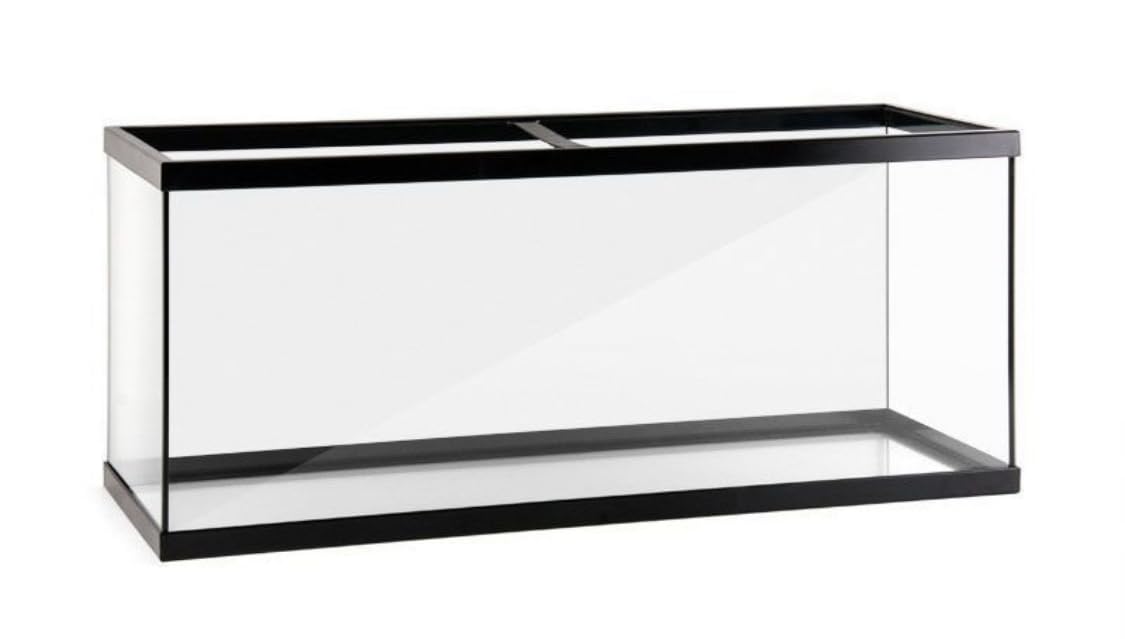
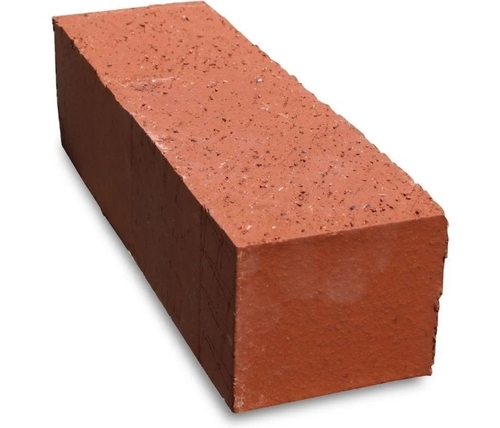
| Application | What the prism model helps calculate | Typical quantity |
|---|---|---|
| Shipping carton | Internal capacity and outer covering | Volume, surface area |
| Room | Enclosed space and wall/ceiling/floor area | Volume, surface area |
| Tank | Geometric capacity at a given fill height | Volume |
| Brick / block | Material volume and dimensional fit | Volume, diagonal |
| Storage cabinet | Available storage space and exterior coverage | Volume, surface area |
Real objects are often more complicated than an ideal rectangular prism: walls have thickness, corners can be rounded, tanks can have fittings, and rooms can contain recesses. The prism model is most useful when the object is reasonably close to a box or when a first-order estimate is appropriate.
Rectangular prism vs. cube
A cube is a special rectangular prism in which all three dimensions are equal: l = w = h = a. Substituting that condition into the general formulas gives the familiar cube formulas.
Common rectangular prism mistakes
| Common mistake | Why it is wrong | Correct check |
|---|---|---|
| Adding l + w + h for volume | Volume is three-dimensional | Multiply: V = lwh |
| Using 2(l+w+h) for surface area | That is not the sum of six face areas | Use SA = 2(lw+lh+wh) |
| Mixing cm and m | The units are not directly compatible | Convert to one unit first |
| Calling √(l²+w²) the space diagonal | That is only a diagonal of the base face | Use √(l²+w²+h²) |
| Forgetting squared/cubed units | Area and volume have different dimensions | cm² for area, cm³ for volume |
Rectangular prism calculator FAQ
It is a three-dimensional solid with six rectangular faces, 12 edges and 8 vertices. A right rectangular prism is commonly called a cuboid.
Multiply the three perpendicular dimensions: V = l × w × h. The result uses cubic units.
Use SA = 2(lw + lh + wh), which adds all six rectangular faces.
It is the area of the four side faces, excluding the two chosen base faces: LSA = 2h(l + w).
It is the straight-line distance through the interior between opposite vertices: d = √(l² + w² + h²).
Yes. A cube is the special case where l = w = h.
Convert them to the same unit before entering them. The formulas assume a consistent unit system.